


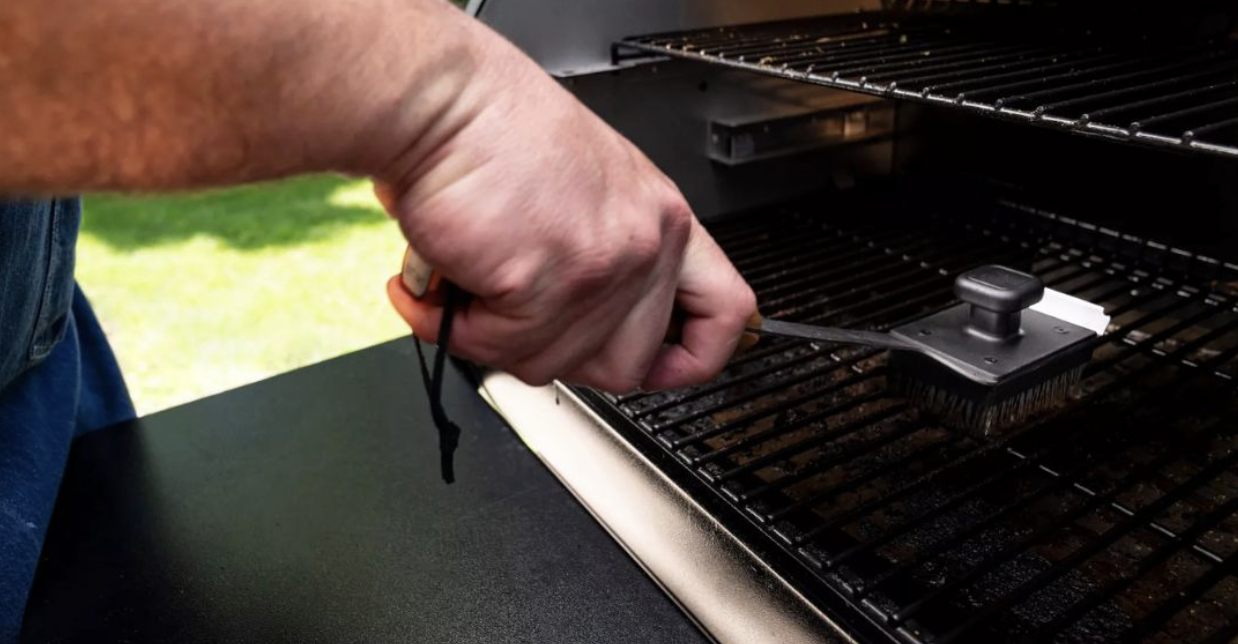
Grill maintenance means cleaning your grates and interior each spring, checking for wear and blockages, and adjusting your habits for cold weather if you grill through the winter. A grill or smoker that gets this routine lasts longer, cooks more evenly, and is safer to use. Here’s how to prep your equipment for spring and keep it running through the colder months, since the two are really one continuous seasonal habit rather than separate tasks.
Key Takeaways
- Grease and fat buildup is a leading contributing factor in grill fires, according to the National Fire Protection Association.
- A full spring cleaning covers the grates, interior, burners, drip trays, and any worn parts.
- Re-season cast iron components with a light coat of oil after cleaning to prevent rust.
- Pellet grills hold temperature especially well in cold weather thanks to heavy side-wall insulation.
- Never run a grill in a garage or other enclosed space, even with the door open. Burning fuel indoors can produce fatal levels of carbon monoxide.
- Rusty grates, uneven heating, or significant damage are signs it’s time to replace rather than repair.
How to Clean a Grill for Spring: 5 Steps
Cleaning your grill isn’t only about better-tasting food. According to the National Fire Protection Association, grease and fat buildup is a leading contributing factor in home grill fires. A thorough spring cleaning reduces that risk while getting your equipment ready for the season.
- Step 1: Clean the grates and surfaces.
- Remove the grates and scrub thoroughly with a wire brush or grill cleaning tool. Soak stubborn residue in warm soapy water, then rinse and dry completely. Clean exterior surfaces with a stainless steel cleaner or mild soap and water. If your grates are heavily rusted rather than just dirty, a paste of baking soda and vinegar left to sit for a couple of hours before scrubbing can loosen rust that soap and water alone won’t touch.
- Step 2: Check for blockages and grease build-up.
- Inspect burners, vents, and drip trays for debris, grease, or signs that critters took shelter over winter. Clear burner obstructions with a small brush or compressed air, and empty and clean drip trays to prevent flare-ups. It’s worth checking burner tubes specifically for spider webs or nests, since insects are drawn to the small, sheltered openings, and a blocked burner tube can prevent your grill from lighting evenly.
- Step 3: Inspect and replace parts.
- Check grates, burners, and heat shields for rust, cracks, or corrosion, and replace any damaged or missing parts. On propane grills, inspect hoses and connections for leaks before the season starts. A simple test is brushing soapy water along the hose and connections, then turning on the gas briefly to see if bubbles form.
- Step 4: Season your grill and smoker.
- If your grill or smoker has cast iron components, re-season them before use. Coat lightly with vegetable oil and heat on high for about 15 minutes to prevent rust and build a non-stick surface. This step matters more than it might seem. A properly seasoned grate not only resists rust but also releases food more easily, which means less sticking and less scraping the next time you cook.
- Step 5: Stock up on supplies.
- Make sure you have charcoal, pellets, or propane on hand, along with grill brushes, tongs, and a reliable food thermometer for the season ahead. If your charcoal or pellets sat through a humid winter, consider starting the season with a fresh bag, since moisture absorbed over time can make fuel harder to light and burn less efficiently.
How to Care for a Grill in Cold Weather
Grilling doesn’t have to stop when temperatures drop. A few adjustments keep your equipment performing well through the colder months:
- Choose the right grill for the cold. Pellet grills hold temperature especially well in winter thanks to heavy side-wall insulation, which keeps heat from escaping the way it would on a thinner-walled gas grill.
- Prepare pellets, utensils, and food before heading outdoors, so you aren’t standing in the cold longer than needed.
- Dress warmly and clear ice from the path to and around your grill, since a slick walkway near an open flame is a real hazard, not just an inconvenience.
- Wipe snow off the grill before cooking. Snow isn’t insulation and will slow the grill from reaching temperature.
- Give the grill extra time to heat up in cold weather. What takes 10 minutes to preheat in summer can take closer to 20 once temperatures drop below freezing.
Never store or run a grill in a garage or other enclosed space. Burning charcoal or gas in an enclosed area can produce dangerous levels of carbon monoxide, which the Consumer Product Safety Commission warns can be fatal even with a door or window open.
- Keep the lid closed as much as possible to hold in heat.
- Use an insulated grill blanket to help retain heat and reduce fuel use, particularly useful for long, low smokes in winter.
- Cover the grill with a proper grill cover after it cools, to protect it between uses.
For tailgate season specifically, our tailgate grilling tips cover quick on-site cleaning tricks worth knowing before your next game day.
When to Replace a Grill or Smoker
If your grill or smoker shows real signs of aging, rusty grates, uneven heating, or significant damage, it may be more cost-effective to replace it than to keep repairing it. Rust that’s flaking rather than surface-level, warped grates that won’t sit flat, or a burner that won’t hold a consistent flame are all signs that a repair may only be a temporary fix.
| Sign | Usually Fixable | Time to Replace |
| Light surface rust on grates | Yes, clean and re-season | No |
| Rust that flakes off in chunks | No | Yes |
| Slightly uneven heat | Yes, check burners and vents | No |
| Grates warped and won’t sit flat | No | Yes |
| Burner won’t hold a steady flame | Sometimes, try replacing the burner | Yes, if replacement doesn’t help |

Spring is a good time to shop, since many retailers stock the newest models and you’ll have the full season ahead of you to get familiar with a new setup rather than replacing mid-summer under pressure.
Litehouse Pools & Spas carries charcoal, gas, and pellet grills and smokers across our Northeast Ohio and Erie, PA locations, along with the parts, covers, and accessories to keep your current setup running well.
FAQ
How do you clean a grill for spring?
Remove and scrub the grates with a wire brush or grill cleaning tool, soak stubborn residue in warm soapy water, clean the exterior, clear blockages from burners and drip trays, and inspect for rust, cracks, or worn parts before the season starts.
Can you grill in cold weather?
Yes, with the right equipment. Pellet grills in particular hold temperature well in cold weather thanks to heavy side-wall insulation, so they’re a reliable choice for grilling through the winter months without a big drop in performance.
How do you protect a grill in winter?
Clear any snow or ice off the grill before use, never store or run a grill in an enclosed space, keep the lid closed as much as possible to hold in heat, and cover the grill with a proper grill cover when it’s not in use.
When should you replace a grill or smoker?
If your grill or smoker shows rusty grates, uneven heating, or significant structural damage, it’s a sign of aging that’s usually worth replacing rather than continuing to repair, especially if the damage affects how evenly it cooks.
Is it safe to grill in a garage?
No. Running a gas or charcoal grill in a garage or other enclosed space can produce dangerous levels of carbon monoxide, even with the door open. Always grill outdoors in a well-ventilated area, away from walls and overhangs.
Final Thoughts
Treating spring cleaning and cold-weather care as one continuous routine, rather than a single once-a-year task, is what actually extends the life of a grill or smoker. Clean it thoroughly each spring, adjust your habits once the temperature drops, and know the signs that it’s time to replace rather than repair. A little consistency across the year saves far more time and money than one heroic cleaning session ever could.
Visit your nearest Litehouse Pools & Spas location in Northeast Ohio or Erie, PA for replacement parts, covers, or a new grill if yours is ready for an upgrade.

