
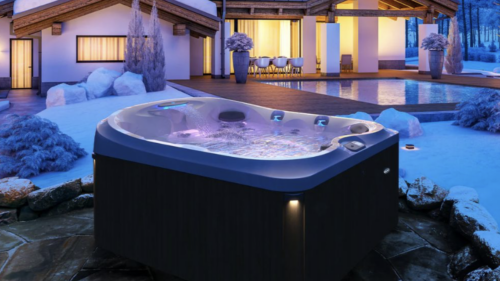
Winterize your hot tub if you won’t soak for six weeks or more. Otherwise, keep it running. That is the simple rule for Northeast Ohio and Erie, PA, where freezing temperatures can arrive in late fall and stay through March. Both choices work, but each needs its own plan, and both plans start before the first hard freeze.
The stakes are real. Water left in cold plumbing can freeze and crack pipes, pumps, and heaters. A tub left running without a routine can run up your energy bill and still freeze if the power fails. This guide helps you choose, then covers how to winterize a hot tub, how to care for one all winter, and how to fix the most common cold-weather problems.
Key Takeaways
- Winterize your hot tub if you won’t use it for six weeks or more. If you plan to soak regularly, keep it running.
- Drain and clean your tub in late fall while temperatures are still above freezing, because draining during a freeze can leave ice in the lines.
- The most important winterizing step is blowing water out of every plumbing line with a wet/dry shop vacuum. Antifreeze is a backup, not a substitute.
- A hot tub that runs all winter needs a secure, undamaged cover, a water level above the skimmer line, and daily circulation.
- The CDC recommends at least 3 ppm of free chlorine in hot tubs and advises against chlorine products that contain cyanuric acid.
- Hot tub water should never be hotter than 104°F, and you should confirm the temperature with an accurate thermometer before you soak.
Should You Winterize Your Hot Tub or Keep It Running?
Start with how you actually use your tub. A soak on a snowy night is a big reason people buy a hot tub, and many Northeast Ohio owners enjoy their hot tub in winter and run it all year. Others use their tub through fall, then shut it down. Both are fine. The mistake is not deciding.
Our rule of thumb is the six-week test. If your tub will sit unused for six weeks or more, winterize it. For shorter gaps, keep it running. A running tub that nobody uses for a month still costs you energy and still needs its weekly care.
Before the First Freeze: Prep for Either Path
Whichever path you pick, do these jobs in late fall while daytime temperatures are still above freezing. Draining a tub in a hard freeze is difficult and risky.
- Drain and deep clean while it’s mild. A full drain and clean every three to four months is a common guideline, and late fall is a smart time for one. If you plan to keep soaking, you start winter with fresh water. If you plan to drain your hot tub for winter, this is the first step. Our hot tub drain and clean service can handle it for you.
- Inspect plumbing connections and look for leaks. Check fittings, jets, and the shell for cracks or seepage. A small leak in October can turn into ice around your equipment in January.
- Check your cover. Press down on it. If it feels heavy or water seeps out, it is waterlogged and has lost its insulating value. A cover like that can also collapse under snow, so it is time for a replacement hot tub cover.
- Clean your filters. Rinse them and soak them in filter cleaner. Replace any that are worn. Dirty filters restrict flow and strain the pump.
- Prepare the area if you’ll be soaking. Add lighting, hooks for robes and towels, and a clear, non-slip path from your door to the tub.
How to Keep Your Hot Tub Running All Winter
A running hot tub is the easiest way to prevent freezing, because moving, heated water resists ice. It does need a steady routine. Here is what that routine looks like.
Protect Your Cover
Your cover is your first defense against heat loss. Check it for tears, and tighten every strap and lock so wind can’t lift it and carry heat away. Float a thermal blanket directly on the water beneath the cover to cut evaporation and heat loss. Clean and condition the vinyl with a product made for hot tub covers so it doesn’t crack in the cold.
Watch the Water Level
Low water makes pumps and heaters shut down or run dry, and that lets pipes freeze. Check the level twice a week and keep it above the skimmer line. Top off with warm water from inside your house, since cold outdoor water can shock the system. Evaporation never stops in winter, because the water is far warmer than the air above it.
Balance Your Water Every Week
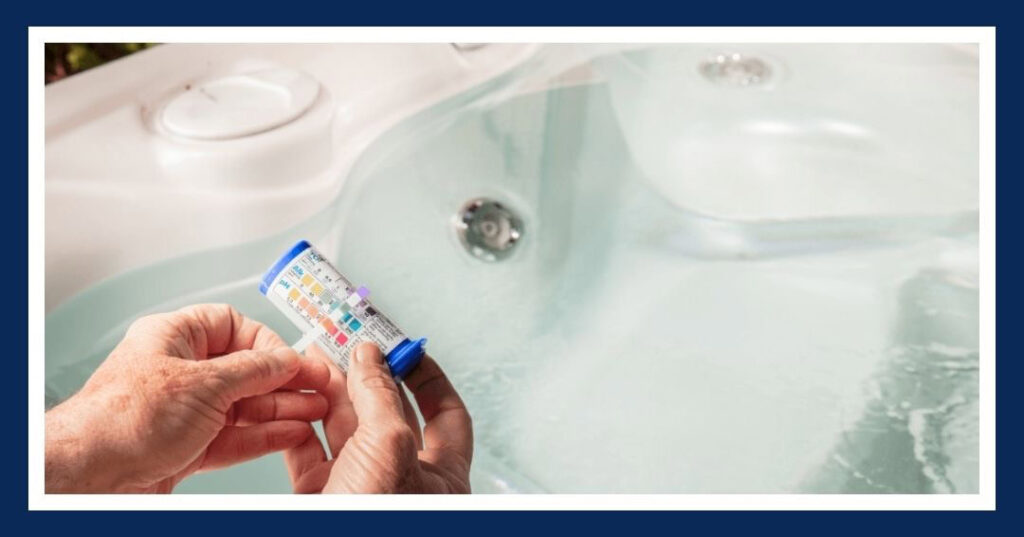
Cold water and a cover that stays on longer change how your chemistry behaves. pH and alkalinity tend to drift, so test at least weekly, and more often when more people soak.

The CDC recommends at least 3 ppm of chlorine in hot tubs. It also recommends against using cyanuric acid, or chlorine products that contain it (often sold as dichlor or trichlor), in hot tubs. The CDC adds that a DPD test kit is more accurate than test strips. If you use bromine instead, follow the target on your product label.
Shock your water weekly with regular use. Less natural aeration under a cover is a common cause of cloudy winter water.
Clean and Rotate Your Filters
Cold water moves through filters more slowly, so they clog faster. Rinse them weekly with a garden hose, and soak them in filter cleaner every four to six weeks. Keep a spare set so you can rotate. Plan to replace filters about once a year, or sooner if cleaning no longer restores flow. On many tubs, a “FLO” error code means dirty filters are restricting water flow.
Keep the Water Circulating
Moving water freezes far more slowly than still water, so run your circulation pump every day. Many newer tubs have a freeze protection mode that turns on the pump and heater when temperatures drop. Make sure yours is enabled. Listen for new noises, and watch for leaks. Ice around the equipment cabinet is a sign of a leak, and it needs repair right away.
Manage Snow and Ice Safely
Sweep snow off the cover with a soft-bristled broom. Never use a shovel or a sharp tool, because it can puncture the vinyl. Clear snow and ice from around the base, and keep a clear path from your door. If the cover freezes to the shell, run the tub to melt the ice instead of prying it open. Forcing it can tear the cover or crack the acrylic.
Control Winter Energy Costs
Heating costs rise in winter, but a few habits keep them manageable. A locked, well-fitting cover has the biggest effect, because it stops wind from stealing heat. If you won’t be home for several days, lower the temperature a few degrees, and avoid big drops that force a long reheat. If your utility offers time-of-use rates, run filtration cycles off-peak. Check your owner’s manual for the temperature range your tub recommends.
Plan for a Power Outage
Winter storms can knock out power, so decide on your plan now. Do not drain the tub during a short outage. Keep the cover closed so the tub holds its heat, and resist lifting it to check. When power returns, check the GFCI breaker, because the tub may not restart on its own. If an outage lasts more than a day or two, call your service provider or follow the freeze-protection steps in your manual. A backup generator sized for your tub is another option worth asking about.
Soak Safely in Cold Weather
The gap between hot water and freezing air makes safety basics matter more. The CDC says hot tub water should not be higher than 104°F. Check the temperature with an accurate thermometer before you get in. Keep towels and robes within arm’s reach, wear footwear to the tub, and shorten your soak when it is well below freezing.
Your Weekly and Monthly Routine at a Glance
Every week:
- Check the water level twice
- Test and balance your water
- Rinse your filters
- Sweep snow off the cover
- Shock the water
- Confirm the pump is running
Every month:
- Condition the cover vinyl
- Deep clean your filters
Troubleshooting Common Winter Issues
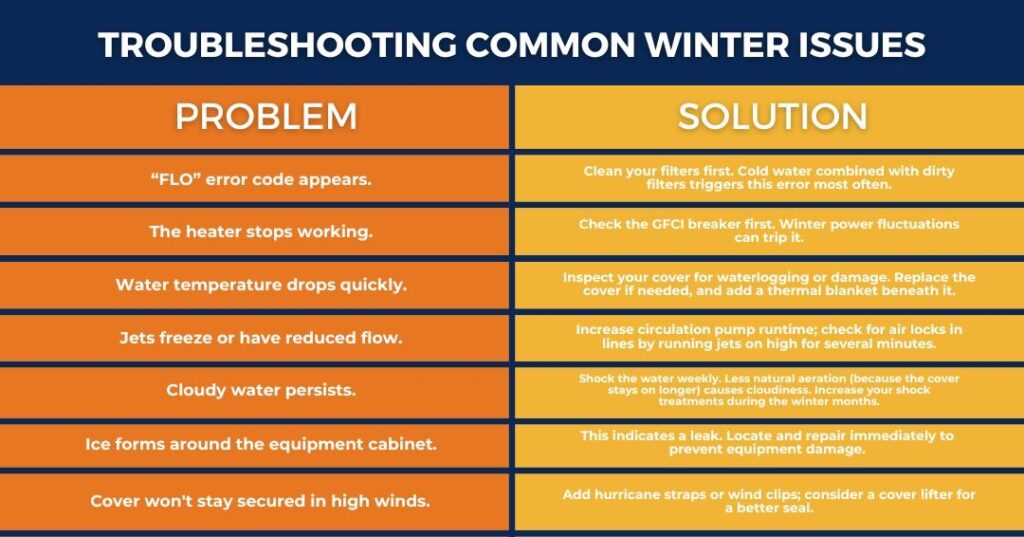
Error codes vary by manufacturer, so check your owner’s manual for the exact meaning on your model.
How to Winterize a Hot Tub, Step by Step
Winterizing means draining the tub and clearing every line so no water is left to freeze. Steps vary by model, so keep your owner’s manual handy. Do the job on a day when temperatures are above freezing.
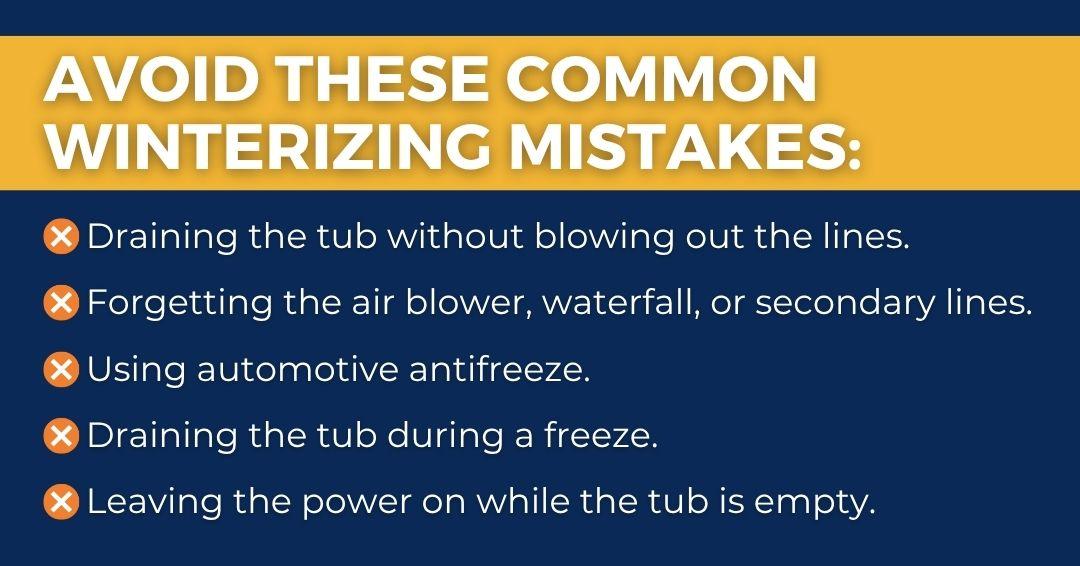
- Pick a mild day. Plan to winterize in late fall, before your first hard freeze. If it is freezing, water can ice up while you drain.
- Turn off the power at the breaker. Never run the pumps or heater on an empty tub.
- Drain the tub. Use the drain spigot with a garden hose, or a submersible pump, and follow your manual.
- Remove and clean the filters. Rinse and soak them, then dry them and store them indoors.
- Open the equipment bay. Pull the pump and heater drain plugs and loosen the unions so trapped water can run out.
- Blow out every line. Set a wet/dry shop vacuum to blow and clear each jet, suction fitting, and the filter well, plus any air blower or waterfall lines. Then switch to vacuum to pull out what is left. Repeat until only air comes out. This is the most important step.
- Vacuum the equipment. Pull water out of the pumps, heater, and filter housing, then wipe the shell dry.
- Add antifreeze only if your manufacturer allows it. Use non-toxic antifreeze made for hot tub or potable-water plumbing. Never use automotive antifreeze, which contains ethylene glycol. Antifreeze is a backup layer. Blowing out the lines is what protects your tub.
- Replace the drain plugs and caps. Leave the pump and heater unions loose if your manual says to, so any trace of water has room to expand.
- Seal the cover. Fit it tightly and secure every strap and lock to keep out snow and rain. Check on it after storms, and sweep off heavy snow.
When spring arrives, you will refill the tub, reconnect the lines, and power it up. Our hot tub opening service can handle that too.
When to Call a Professional
Winterizing is a manageable weekend job if you are comfortable with a shop vacuum and your tub’s plumbing. It is also easy to miss a line, and one missed line can mean a cracked pipe in March.
Litehouse Pools & Spas hot tub technicians are certified to service most major brands. Our closing service covers the full process: cleaning the cover, draining the tub, blowing out the plumbing lines, vacuuming the pumps, heater, and filter, and adding hot tub antifreeze. If you plan to keep soaking all winter, our maintenance programs include regular service calls and drain and clean visits, so part of the weekly routine above is handled for you. Learn more about our hot tub services.
FAQ
Should I winterize my hot tub or keep it running?
Winterize your hot tub if you won’t use it for six weeks or more. Keep it running if you soak regularly and have reliable power. A running tub resists freezing because the water stays heated and circulating, but it costs more to operate and needs weekly care. Winterizing costs nothing to run but requires draining and clearing every line.
When should I winterize a hot tub in Ohio?
Winterize in late fall, before your first hard freeze, and on a day when temperatures are above freezing. Draining a tub in freezing weather can leave ice in the lines and make the job harder. In Northeast Ohio and Erie, PA, that window can close quickly, so book a closing appointment early if you want professional help.
Can I use my hot tub in the winter?
Yes. A hot tub works well in winter when it has a secure cover, the right water level, and daily circulation. Keep the water at or below 104°F, the maximum the Consumer Product Safety Commission advises, and check it with an accurate thermometer. Keep towels and footwear within reach, and shorten your soak when it is well below freezing.
Do I need antifreeze to winterize a hot tub?
Not always. Blowing every plumbing line dry with a shop vacuum is the step that protects your tub, and some manufacturers don’t require antifreeze when the lines are fully cleared. Many technicians still add it as a backup. If you use it, choose non-toxic antifreeze made for hot tubs, never automotive antifreeze, and follow your owner’s manual.
What happens if a hot tub freezes?
Water expands as it freezes, which can crack plumbing, pumps, heaters, and jets. Warning signs include no water flow, error codes, leaks, or ice around the equipment cabinet. If you suspect your tub has frozen, turn off the power and call a service technician before restarting it. Restarting a frozen system can cause more damage.
What should I do if the power goes out?
Keep the cover closed and do not drain the tub during a short outage, since a covered tub holds heat for a while. When power returns, check the GFCI breaker, because the tub may not restart on its own. If the outage lasts more than a day or two, call your service provider or follow your manual’s freeze-protection steps.
Is it cheaper to winterize a hot tub or keep it running?
Winterizing is cheaper to run because the tub uses no electricity while it is shut down. Running a tub in winter costs more since the heater works harder against cold air, though a secure cover, a thermal blanket, and modest temperature setbacks help control costs. Your actual costs depend on your tub, your cover, and local electric rates.
Pick Your Winter Plan, Then Book It Before the Freeze
Whether you winterize your hot tub or keep it running, the work that matters happens before the first hard freeze. Choose your plan, finish your late-fall prep, and get on the service schedule while appointments are still open.
Litehouse Pools & Spas serves hot tub owners across Northeast Ohio and Erie, PA. Schedule a hot tub closing or find your nearest Litehouse location, and we will help you keep your spa protected all winter.
